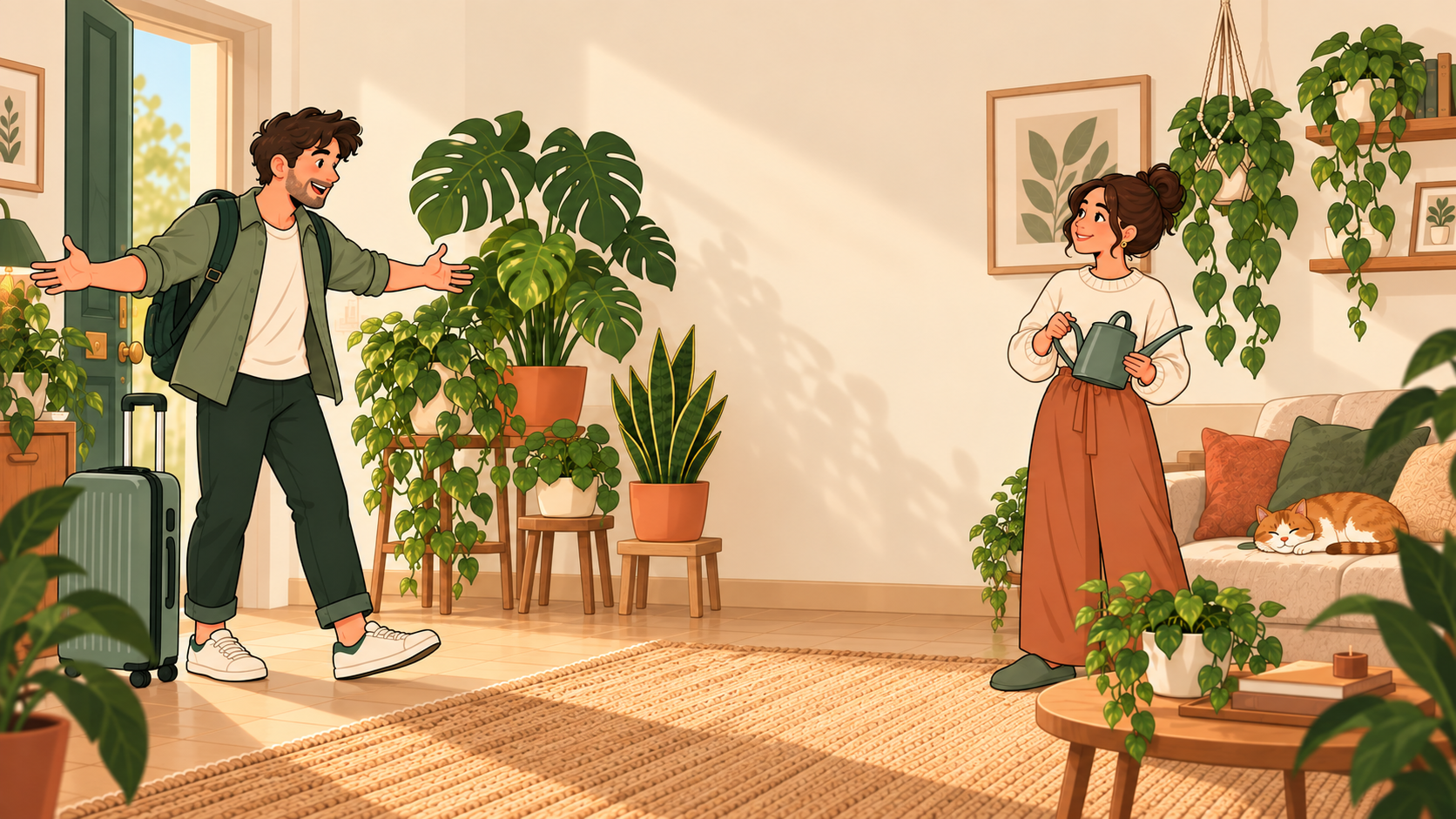
Plant Care, Even When You're Away
Turning plant owners' knowledge into clear care instructions for someone they trust.
Scroll ↓
Developed during a Digital Product Design Bootcamp, PlantSitter is a UX/UI concept and interactive prototype for sharing plant care between an owner and a trusted friend.
ROLE
UX/UI Designer
METHODS
Desk research, competitor review, interviews, exploratory survey, affinity mapping, personas, story mapping, moderated usability testing
TOOLS
Miro, Figma, ChatGPT/Codex, Claude
THE PROBLEM
Handing over a key does not hand over the knowledge.
Owners know each plant’s routines and exceptions. A trusted friend must identify the right plants, understand their needs and decide what to do during each visit. Messages and notes can provide instructions, but leave the friend to assemble a care plan.
I initially explored a marketplace connecting plant owners with potential sitters. All four discovery interviewees described care involving people they already knew. Their accounts led me to focus on supporting an existing relationship through a clearer handoff.
INITIAL DIRECTION
Find a plant sitter
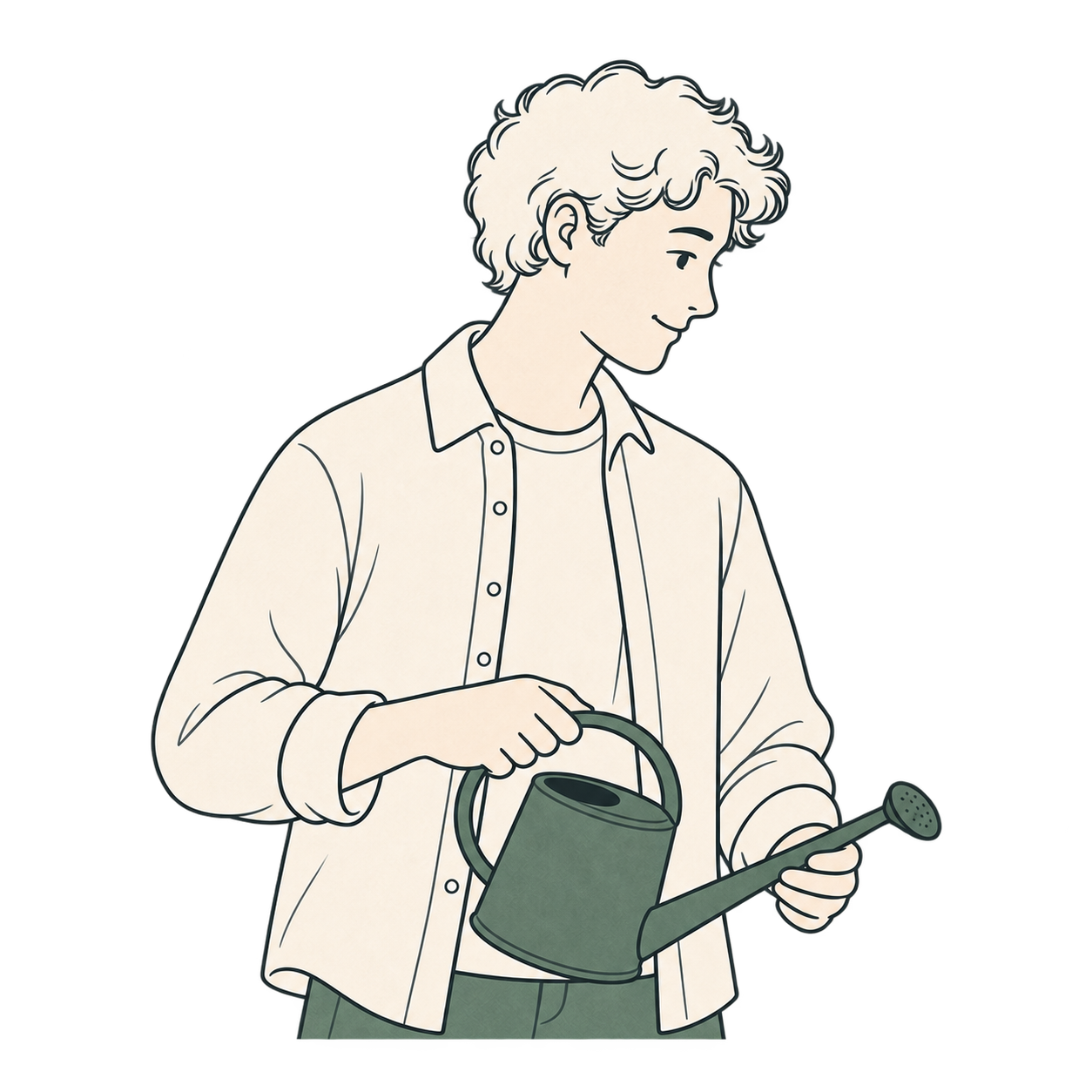
01 • Plant owner
Looks for someone to care for their plants while away.
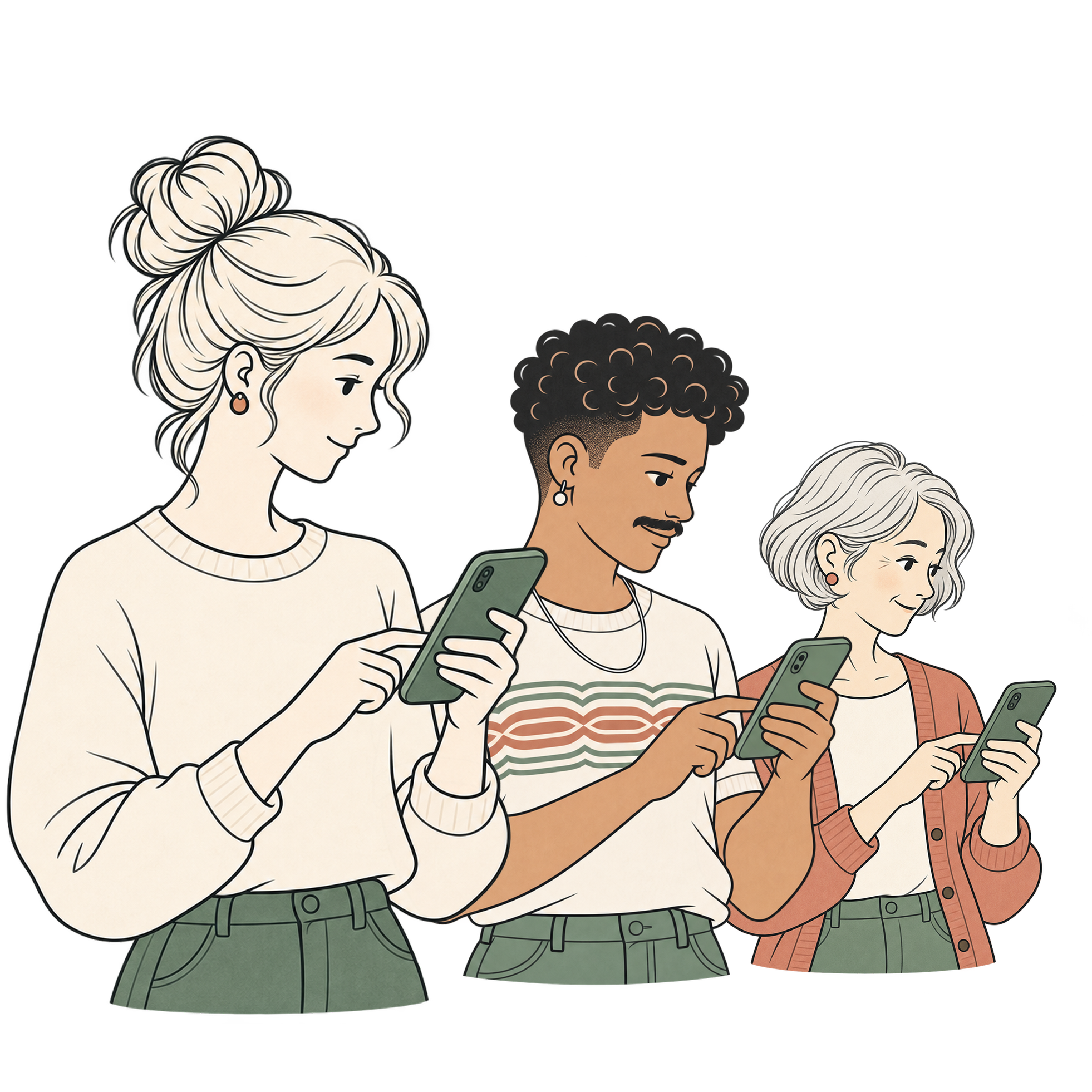
02 • Available sitters
Potential sitters can be discovered and compared.

03 • Sitter selection
The owner chooses someone based on their needs.
DIRECTION AFTER RESEARCH
Support an existing care relationship
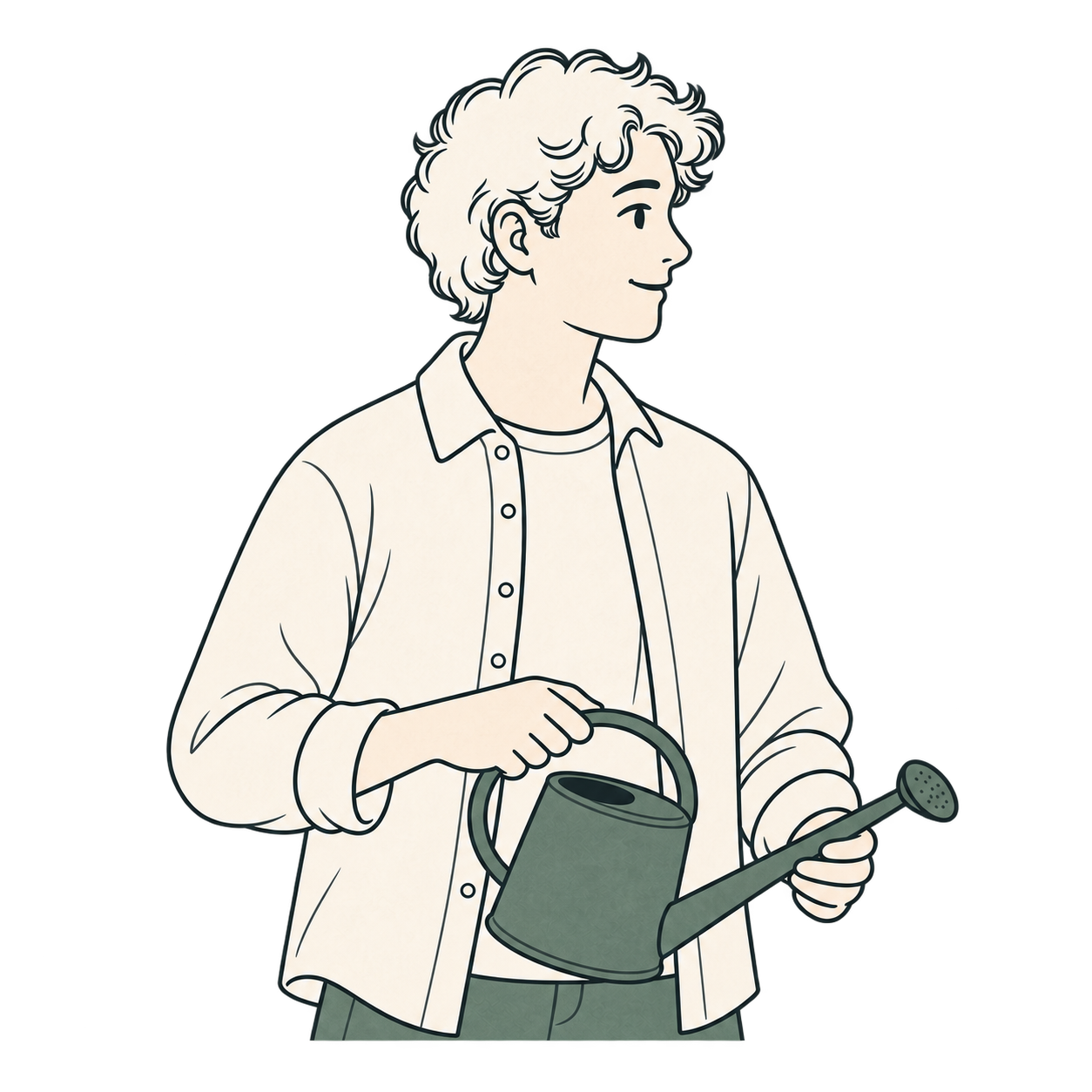
01 • Plant owner
Prepares care instructions based on each plant's needs.
02 • Care guide
Organises the instructions into a clear handover.
03 • Trusted friend
Uses the guide to understand what needs to be done.
04 • Plants cared for
Receive care while the owner is away.
Mixed-up plants, overlooked pots and missed instructions pointed to difficulties during the handoff and the care visit itself.
THE INSIGHT
The issue was not always a missing instruction.
One participant mixed up plants despite receiving written guidance. Another described small pots being overlooked between larger plants, while a third reported that watering amounts had not been followed. These accounts suggested that the handoff needed to support plant identification and decisions during a visit—not simply provide more information.
She had written to me, but I mixed up the plants.
Worry was not the main signal
Reported worry was relatively infrequent in this exploratory sample. I therefore focused the concept on the practical difficulties described in interviews, rather than assuming anxiety was the central problem.
Support the sitter without adding pressure.
I focused on clear care instructions, visible progress and a way to explain unfinished tasks.
Exploratory survey: 31 respondents with plant-care experience, out of 45 total responses. Descriptive results from this sample.
Context: a 2020 Statista/YouGov survey found 74% of respondents had plants at home (Mieterzeitung). Separately, 64% of Germans took a trip of 5 or more days in 2025 (Tourismusanalyse). These figures explain why the situation is relatable; they do not measure demand for PlantSitter.
TWO ROLES & ONE QUESTION
Two perspectives on the handoff.

PLANT OWNER
Ben
Needs to share each plant’s routine, location and care exceptions before leaving.

TRUSTED FRIEND
Mara
Needs to identify each plant, understand today’s tasks and decide when care is needed.
How might we help Ben and Mara build a shared understanding of the care details that matter most, without making the handoff unnecessarily complicated?
EARLY EXPLORATION
An information-first approach.
The early wireframes organised care around status filters, a plant overview and individual detail pages. Mara could find care information, but needed to navigate between the overview and each plant’s details to act on it.
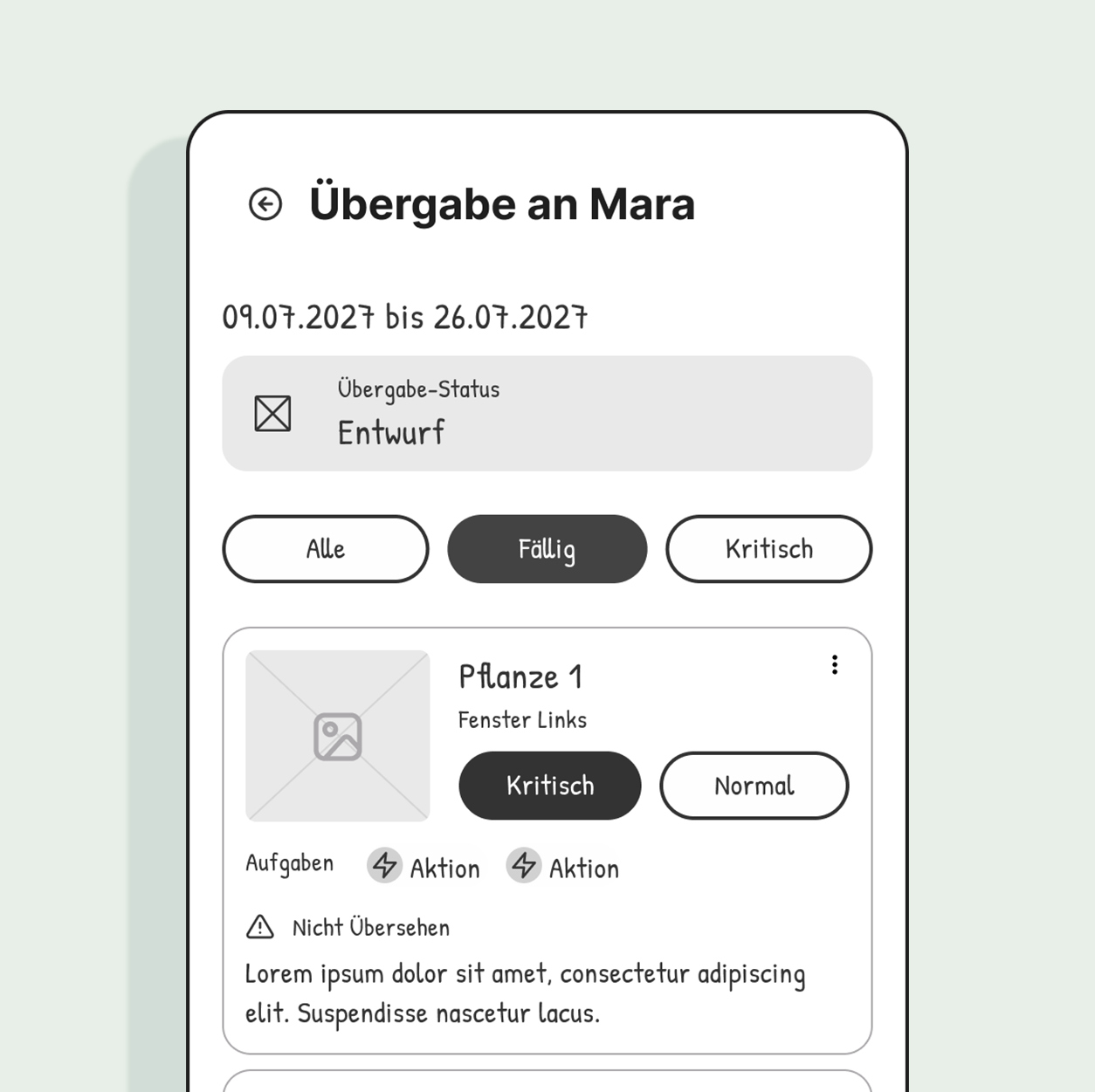
01 • Status filters
Tasks were accessed through Alle, Fällig and Kritisch.
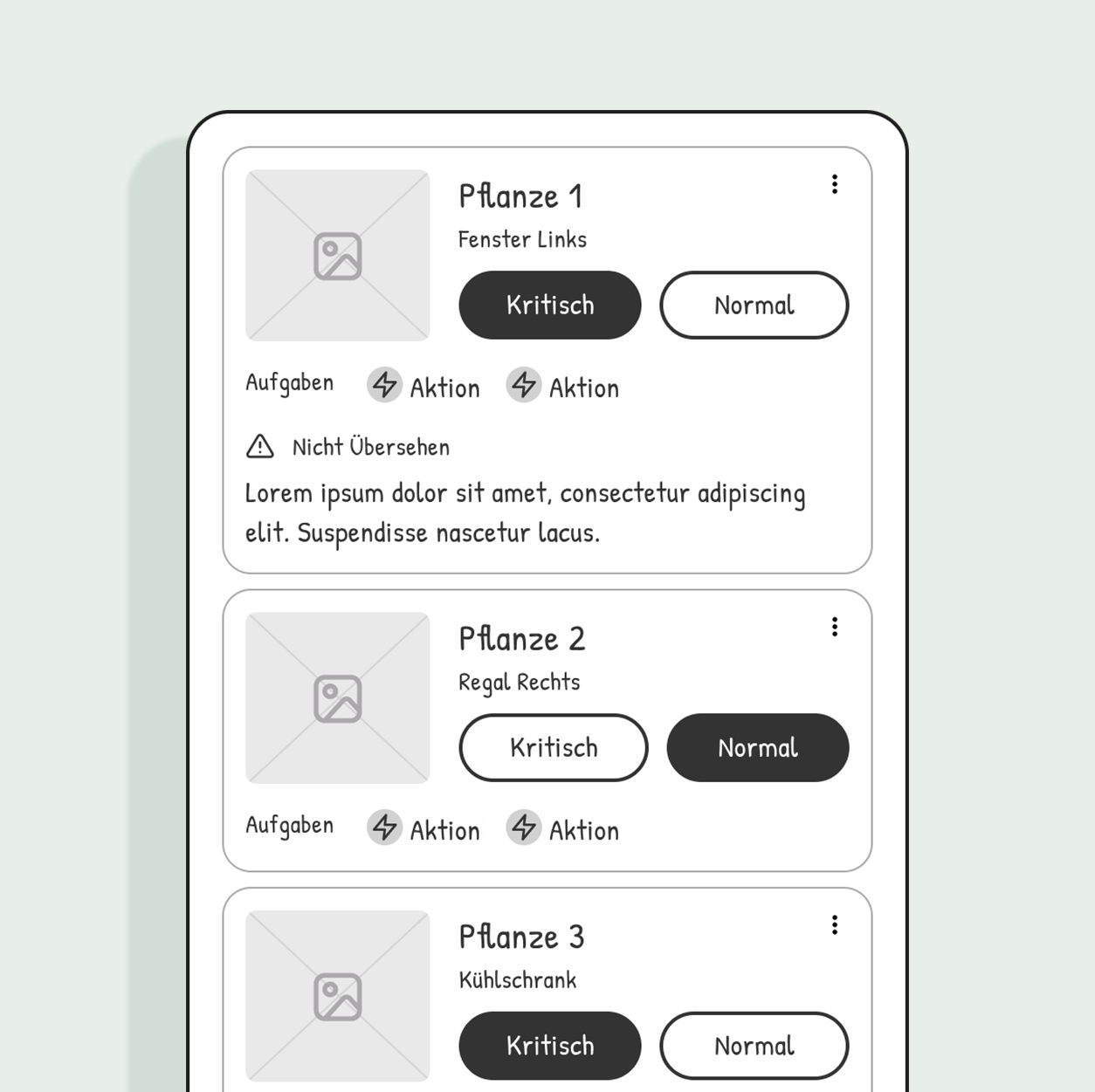
02 • Plant overview
A long ordered list without visible grouping by area.
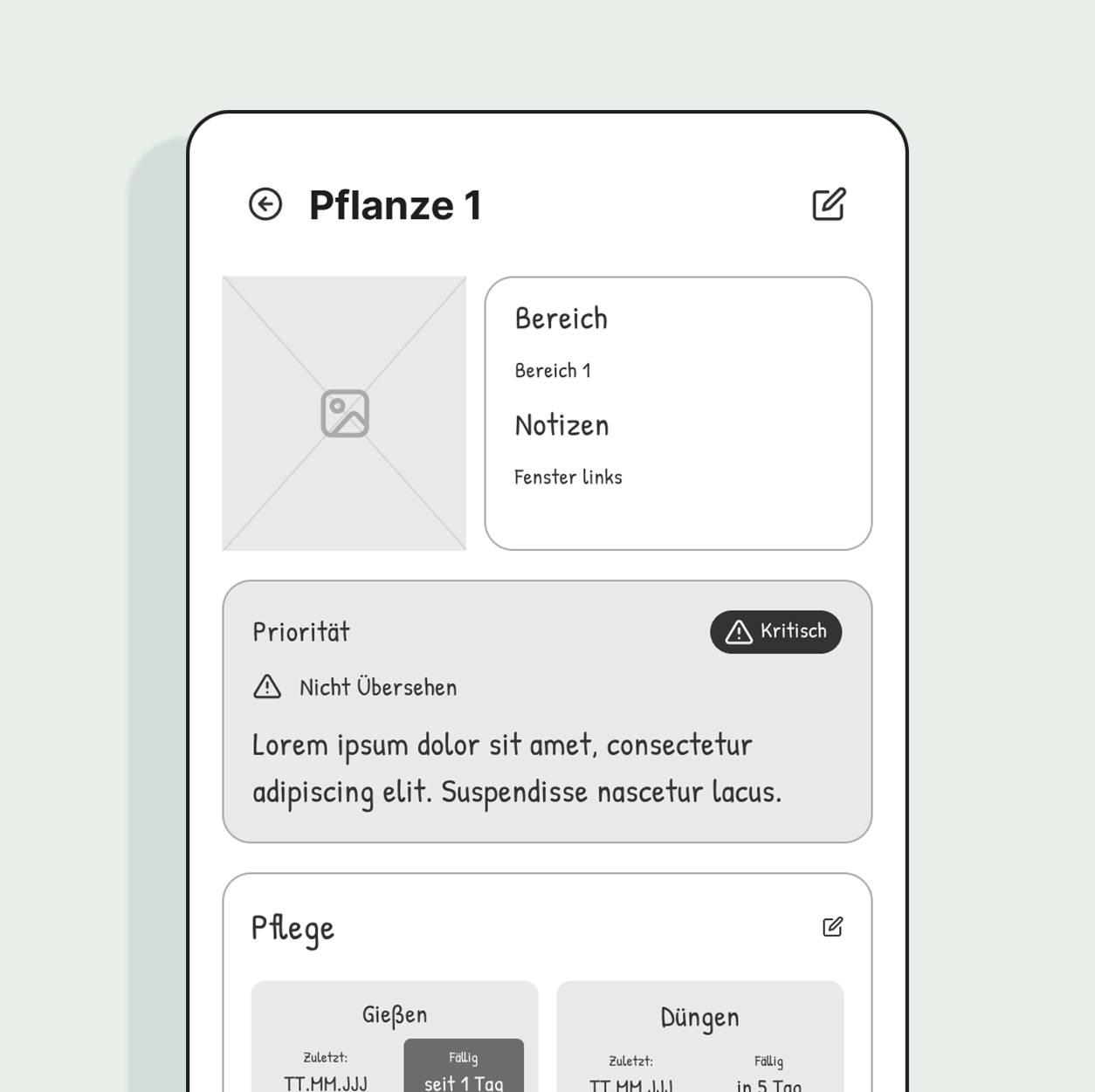
03 • Detail-first tasks
Mara opened each plant to review and complete its care tasks.
WHAT CHALLENGED THIS APPROACH
Too much to navigate. No clear place to start.
In informal feedback, interviewees and other reviewers less familiar with plant care described the overview as crowded and difficult to navigate. The long list felt discouraging, and they were unsure where to begin. This prompted me to reconsider how the experience should guide a care visit.
DESIGN DIRECTION
A shift in perspective, not in audience.
Both roles informed the concept from the beginning, with Ben as the primary persona. Feedback on the early wireframes prompted a shift in how I approached the interface: rather than starting with the information Ben could provide, I began structuring the experience around what Mara needed to see and do during a care visit.
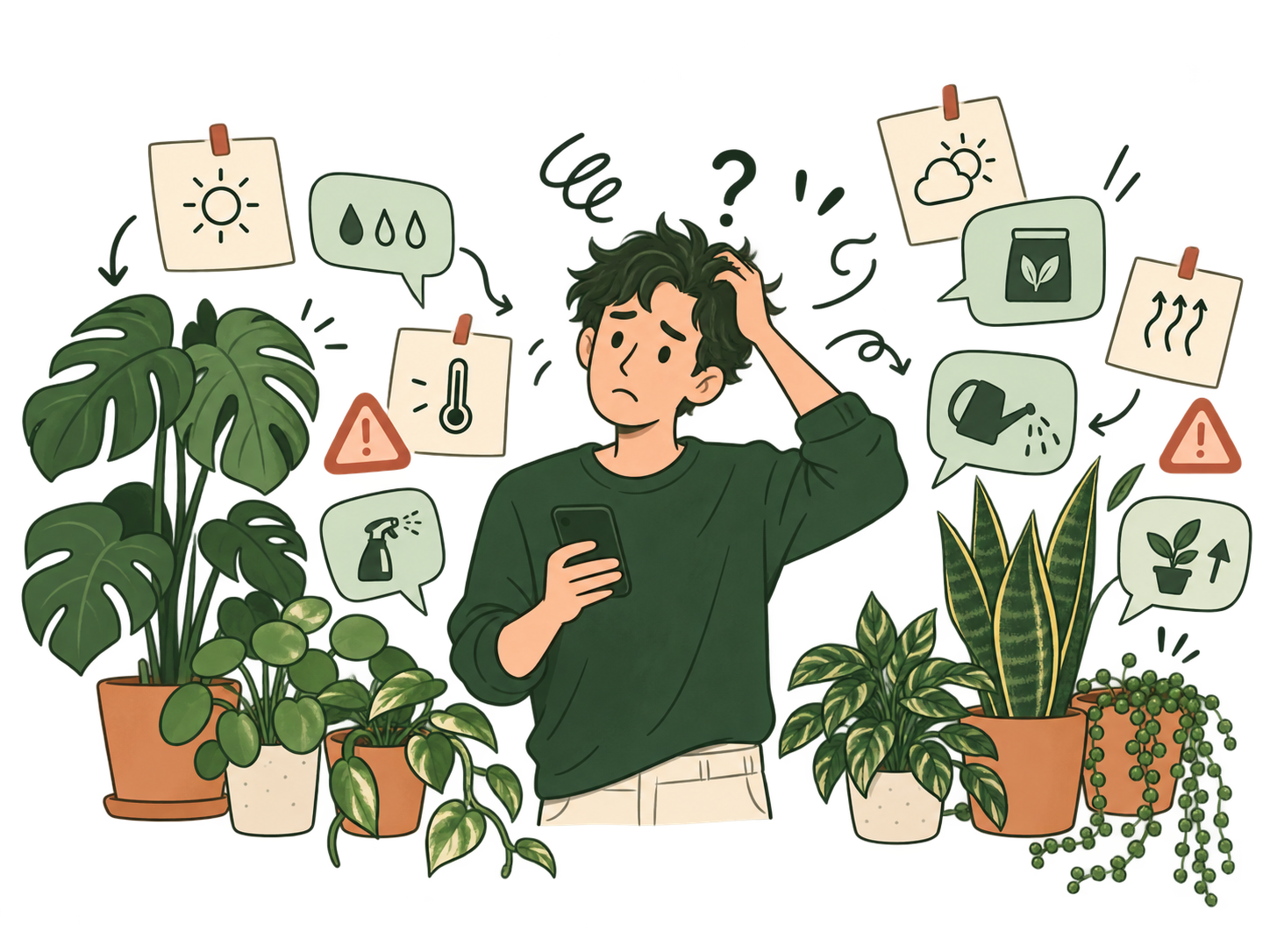
INITIAL APPROACH
What does Ben need to document?
Information organised around plant details, filters and individual care instructions.
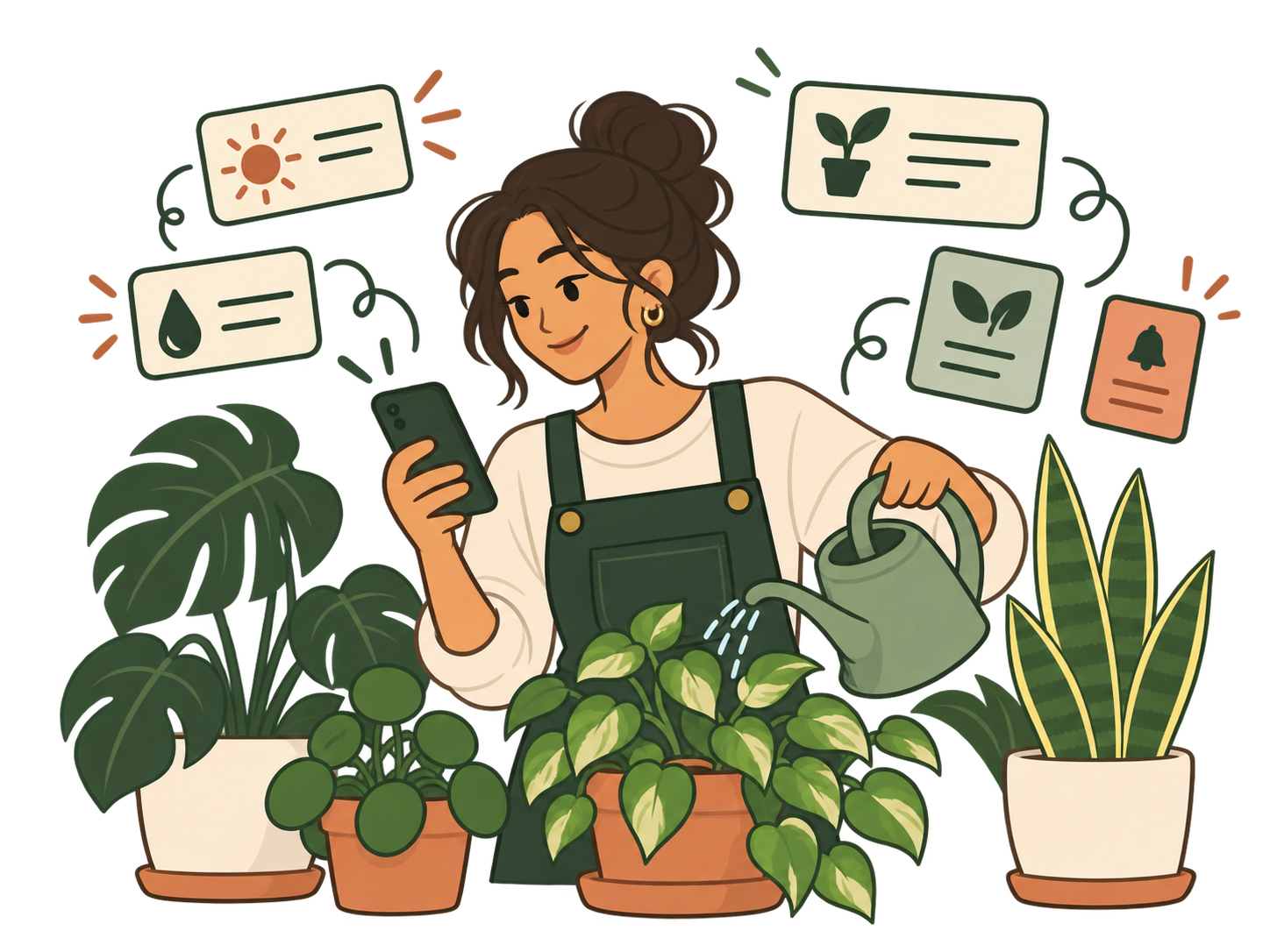
REVISED APPROACH
What does Mara need to see and do?
A guided visit that makes the next task, the relevant information and available actions clear.
THE DESIGN PRINCIPLE
Design the preparation around the moment of care.
Mara’s visit helped define what Ben needed to record: plant identity, location, routine care and relevant exceptions.
TESTING & ITERATION
Small interactions, important consequences.
Three moderated usability sessions explored Ben’s preparation and Mara’s care visit. The findings informed several revisions, alongside further design review. Two follow-up sessions then revealed remaining difficulties with entering a handoff and understanding when to finish a visit.
Clarifying what “Prio” really means
Participants interpreted “Prio” as importance or which plant to check first. I clarified the setup label to “Prio – Besondere Pflege” while retaining the badge. Whether people understand the revised wording without prompting remains an open question for further testing.

Making invitation choices explicit
The revised invitation gave Mara explicit accept and decline actions, making both responses available directly. This design decision supported her ability to choose whether to help. Its effect on perceived obligation was not established in the usability sessions.
Allowing flexible
input order
All three initial participants tried naming a plant before adding its photo. The prototype required the opposite sequence. This revealed a need to support flexible entry rather than force a fixed order; that change remains a requirement for future development.
Separating visits
from tasks
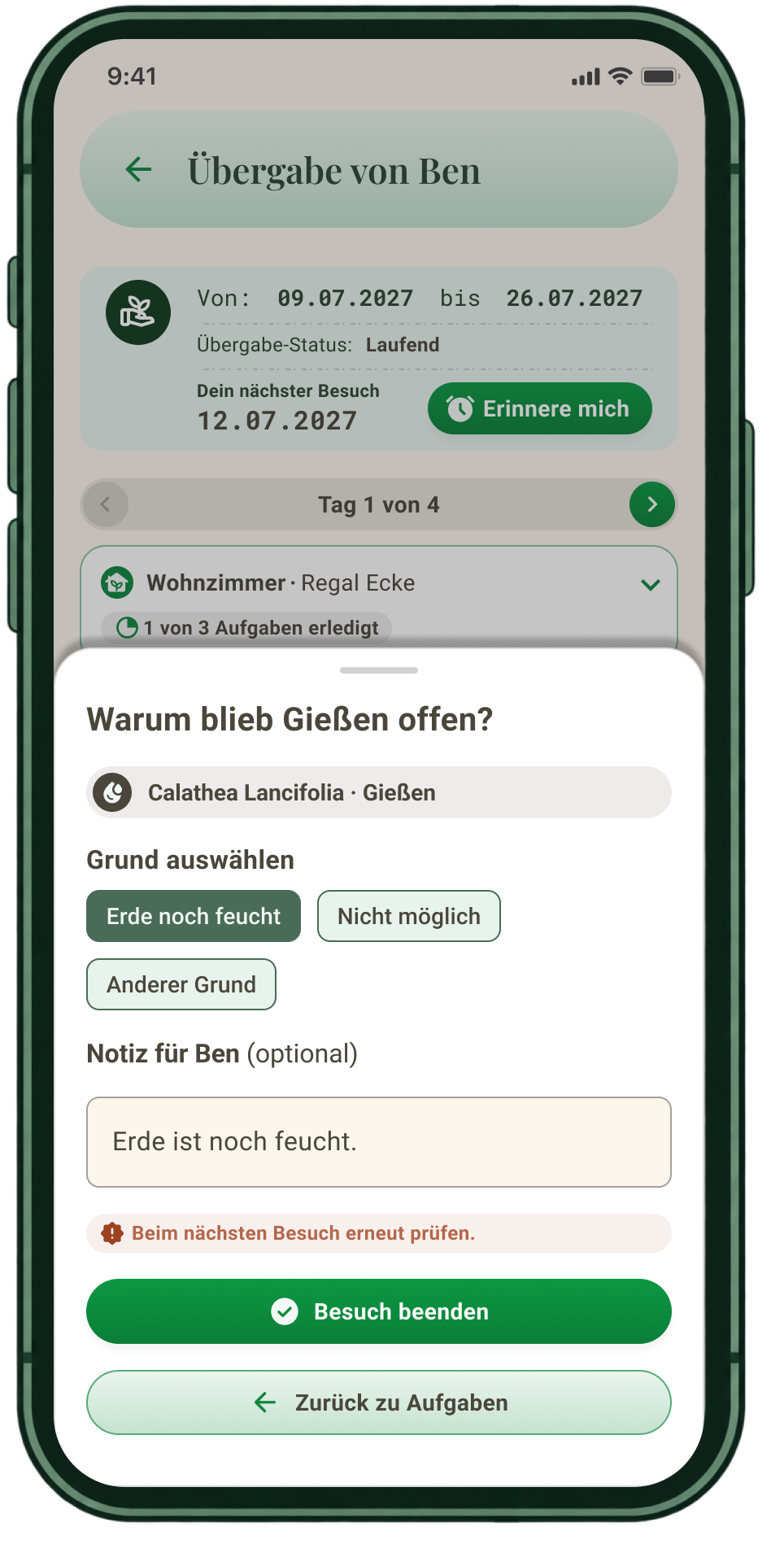
Further design work let Mara finish visits with care still open, recording a reason and reminder. In follow-up testing, one participant selected the finish action before recording care. The sequence therefore needs clarification while preserving the option to skip unnecessary care.
THE REVISION
From plant lists to guided care.
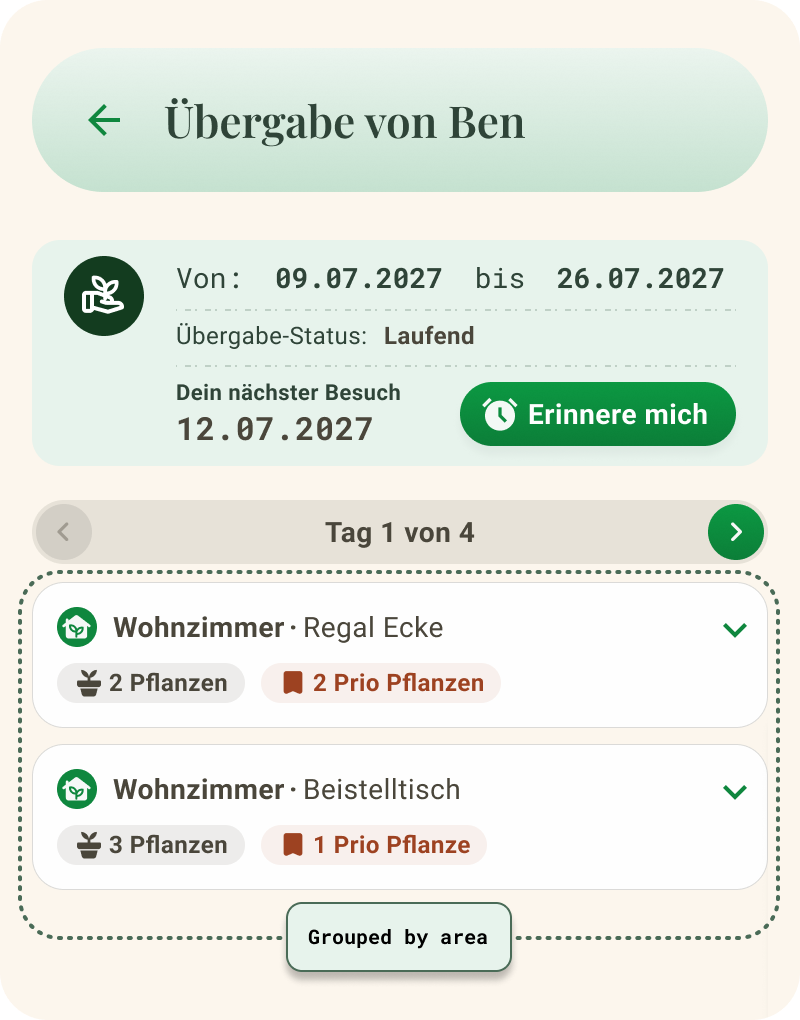
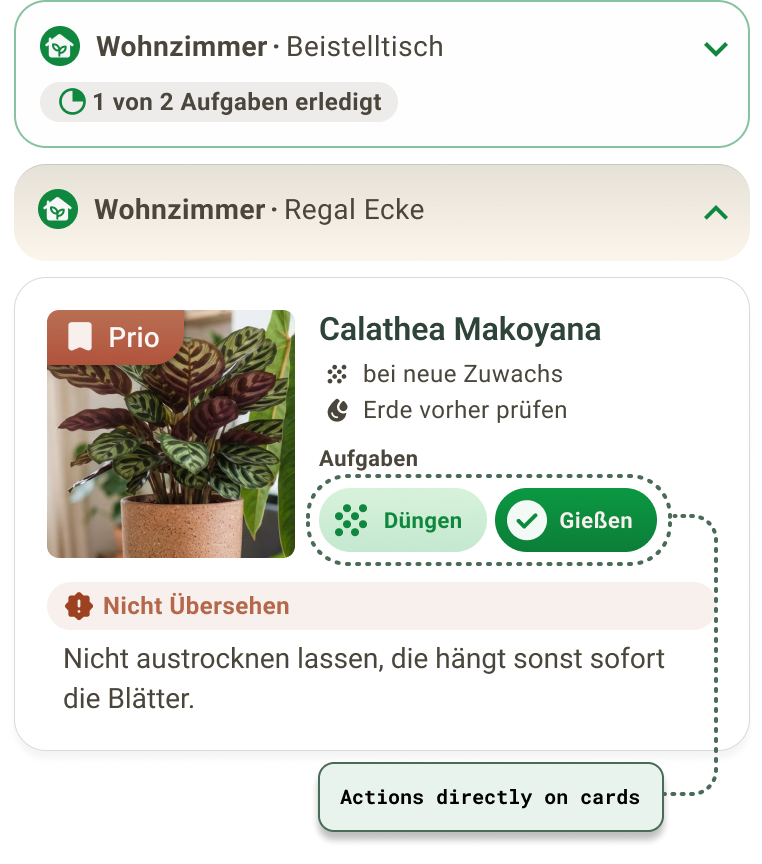
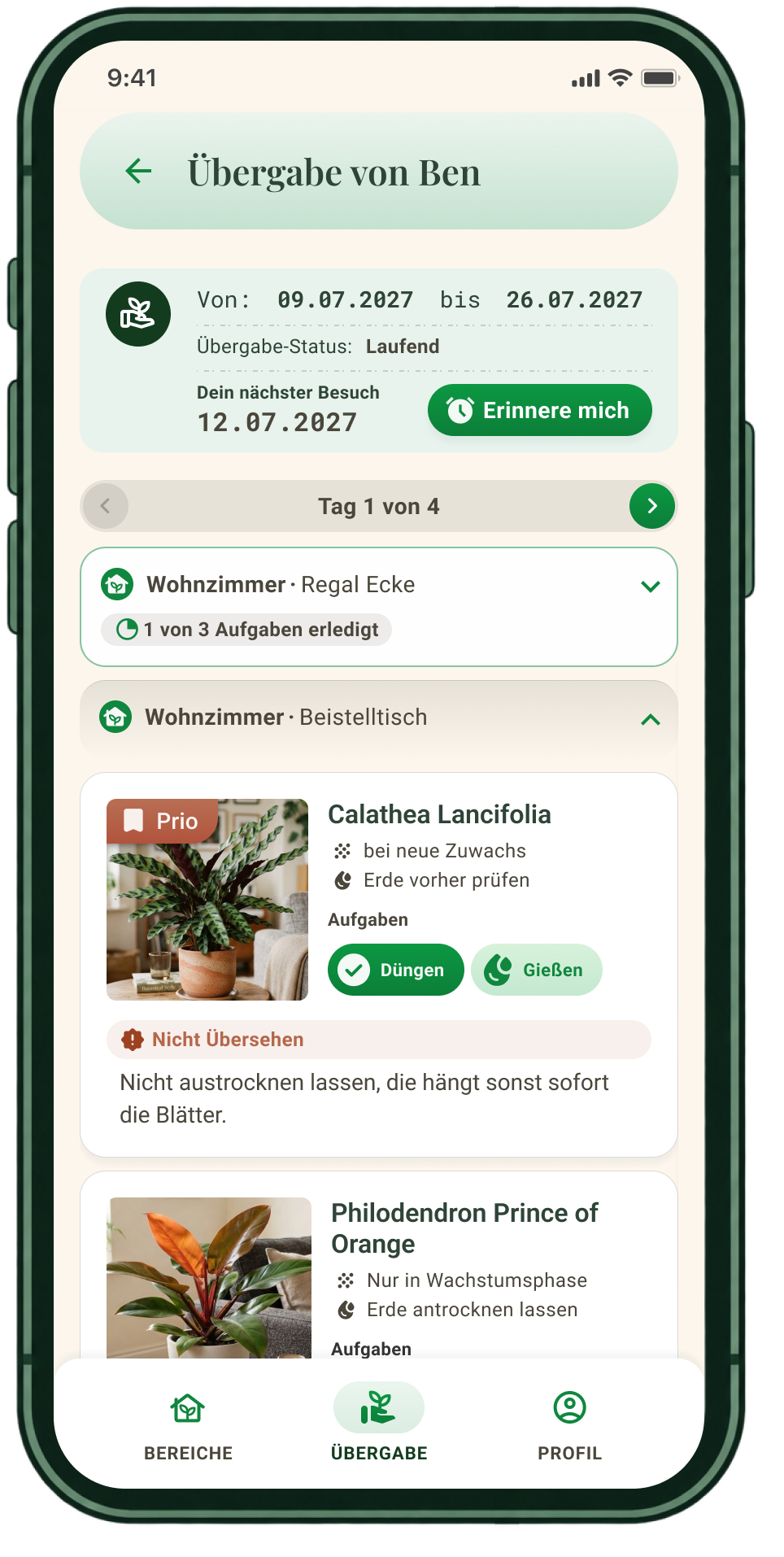
The revised interface brings care tasks into a clearer structure, organised by day and area. Mara can see what needs attention, complete tasks directly on plant cards and explain when care needs to be skipped—all without losing sight of the visit as a whole.
01 • KNOWLEDGE TRANSFER
Organising care around the visit.
Tasks are grouped by day and area, with care instructions and actions directly on plant cards. This addresses the earlier reliance on filters and individual detail pages.
02 • HANDLING EXCEPTIONS
Leaving room for care exceptions.
Mara can record why care was skipped and set a reminder. This separates finishing the visit from completing every task, for example, when the soil is still wet.
THE PRODUCT
From Ben's knowledge to Mara's visit.
Explore how PlantSitter connects both sides of the care experience, from preparing a handoff to following care instructions during a visit.
Try the interactive prototype
Follow Ben as he prepares the handoff, then Mara as she uses it during a care visit.
Select START in the prototype to begin.
The interface is in German.
OUTCOME & REFLECTION
A clearer handoff for everyday plant care.
PlantSitter translates an owner's plant-specific knowledge into a guided care experience for someone they trust. Tasks organised by day and area, direct care actions and transparent handling of unfinished tasks help connect preparation with the reality of a visit.
Key learning
Clear actions need the right context and sequence. Follow-up testing showed that making an action prominent can improve visibility while still leaving questions about when it should be used.
What comes next
The next iteration would make handoff details easier to access, clarify when to finish a visit and further test how easily sitters can follow instructions without guidance.
RESEARCH AT A GLANCE

4
Discovery interviews
31
Eligible survey response
5
Usability-test participants
31 respondents with plant-care experience out of 45 total survey responses. Five usability-test participants across two rounds.